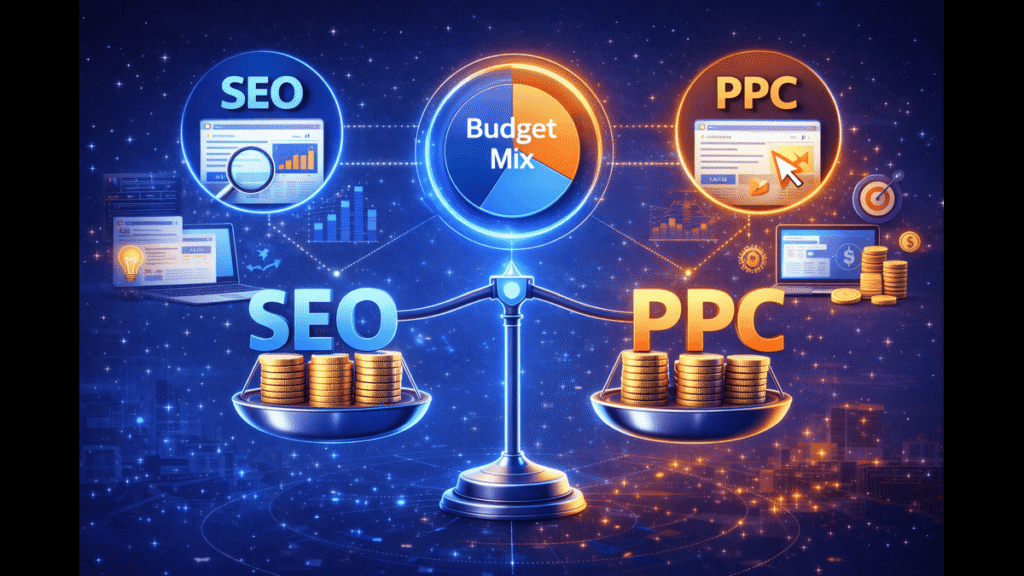
Achieving the right budget balance between Search Engine Optimization SEO and Pay Per Click PPC advertising remains a key challenge for marketers seeking both long term growth and short term performance according to insights from Search Engine Journal.
The report notes that while SEO and PPC share the goal of driving qualified traffic they deliver value in different ways. SEO emphasizes organic visibility and sustainable presence while PPC provides immediate targeted exposure. Aligning investment across both channels can improve overall ROI reduce waste and support strategic business objectives.
Industry experts say the first step in determining the ideal budget mix is understanding business goals such as revenue targets customer acquisition costs and sales cycles. Companies with longer sales cycles or a focus on brand authority may invest more in SEO while those targeting rapid growth or seasonal demand may allocate a larger share to PPC.
Data analysis is crucial for strategic planning. Marketers are encouraged to review historical performance across channels to identify which tactics have delivered the greatest impact on conversions and revenue. Using analytics allows businesses to adjust budgets based on performance signals rather than intuition alone.
Other factors include industry competition levels keyword value and audience behavior. Highly competitive keywords may require greater PPC spending to maintain visibility while niche terms with strong organic potential might offer better ROI through SEO. Balanced tracking and attribution models are essential to measure cross channel impact accurately.
The report also highlights the importance of iterative optimization. Marketing leaders are advised to periodically revisit budget allocations test different channel mixes and adapt to changing market conditions or search algorithm updates. Combining SEO insights with PPC targeting data can unlock synergies that enhance overall campaign performance.
As digital advertising evolves balancing SEO and PPC investment is increasingly viewed not just as a budgeting decision but as a strategic part of integrated marketing that drives growth at both tactical and strategic levels.