Search Engine Journal reports that search engine optimization SEO has evolved beyond a single discipline reflecting its growing complexity and close integration with other areas of digital marketing. As search engines and user behaviors change marketers increasingly recognize that successful SEO now requires strategies spanning content analytics user experience and AI.
The report notes that traditional approaches to SEO focused largely on keyword optimization and link building are no longer sufficient in a landscape shaped by generative AI AI assisted search results and richer user intent signals. Modern SEO requires collaboration across teams to align technical skills with broader business objectives and audience needs.
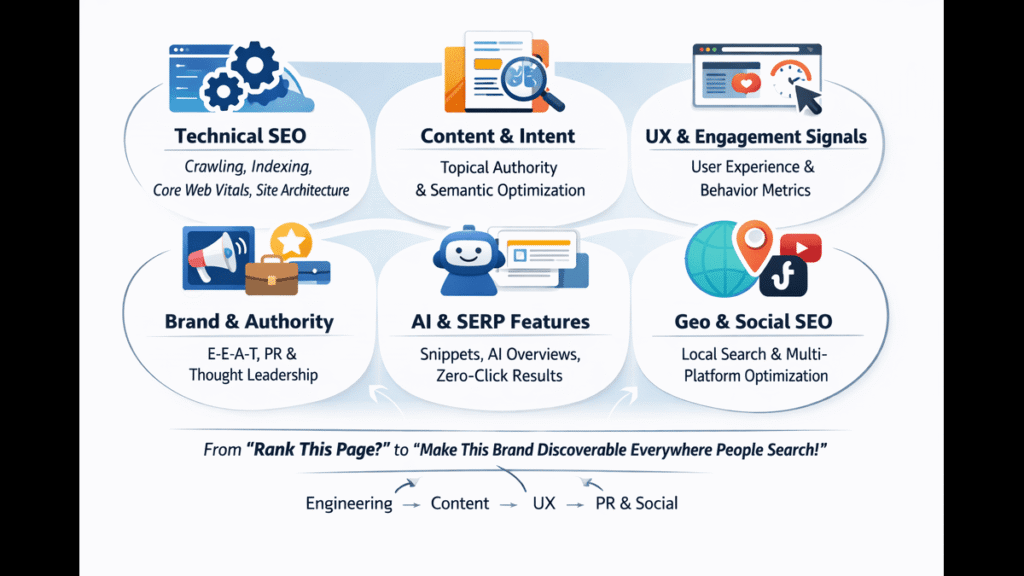
Experts highlight that contemporary SEO must address multiple dimensions including content strategy data analytics semantic optimization accessibility and cross channel audience engagement. This evolution is partly driven by search engines’ growing ability to interpret context meaning and user intent rather than simply matching search terms.
Another key trend is the integration of AI and machine learning into SEO workflows. From automated content suggestions to predictive insights and technical issue detection AI tools are improving SEO processes while demanding a wider range of skills from professionals responsible for strategy and execution.
Industry practitioners note that SEO increasingly overlaps with content marketing UX design conversion rate optimization CRO brand strategy and data science. As a result effective SEO teams are becoming more cross functional drawing expertise from multiple areas to drive visibility relevance and user satisfaction.
The transformation reflects broader changes in how people access and interact with information online with search engines and AI systems placing greater emphasis on usefulness context and overall quality signals. As digital environments continue to evolve marketers are encouraged to adopt a more integrated strategic approach to SEO viewing it not as a standalone function but as a central element of comprehensive digital growth strategies.