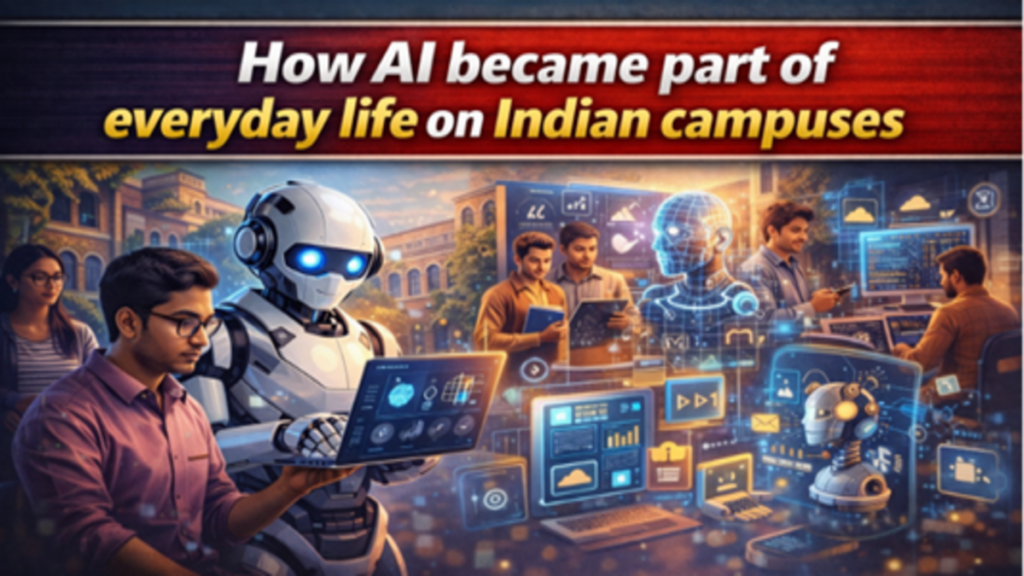
Who is using artificial intelligence on campuses today, what role is it playing, when did it become mainstream, where is it being used, why did it grow so fast, and how has it changed student life? In 2025, the biggest education shift in India did not arrive with loud announcements or futuristic robots. It happened silently. In classrooms, hostels, libraries and even late-night study sessions, AI slipped into daily campus life becoming a trusted companion for millions of students and teachers across the country.
For students, AI is no longer something exciting or experimental, it is simply useful. In 2025, students across Indian campuses began using AI tools almost instinctively. From understanding difficult subjects and summarizing long textbooks to preparing for exams and working on group projects, AI became a daily academic assistant. Many students now rely on AI-powered platforms to create personalized study plans based on their strengths and weaknesses, helping them learn smarter rather than harder.
AI is also reshaping how students think about their future. Career guidance tools powered by AI are helping students explore suitable job roles, internships, and skill paths. Instead of generic advice, students receive recommendations tailored to their academic performance, interests, and career goals. This shift has made career planning more data-driven and less confusing for young learners.
Teachers, too, have embraced AI in a big way. Faculty members are using AI tools to support routine tasks such as grading assignments, tracking student progress, and preparing lecture materials. This has reduced administrative burden and given teachers more time to focus on creative teaching, mentoring, and student engagement. Some platforms even offer insights into how students are interacting with content, allowing educators to adjust their teaching methods in real time.
Beyond academics, AI is also playing a role in student wellbeing. Several campuses have started experimenting with AI-based tools for mental health support. These systems help identify stress patterns, offer basic coping suggestions, and guide students toward counselling or support resources when needed. In an increasingly competitive and fast-paced academic environment, such tools are helping students manage pressure more effectively.
The year 2025 marked a clear turning point for AI adoption in education. Earlier, AI was seen as futuristic and limited to elite institutions or research labs. By the end of the year, it had become mainstream across Indian campuses. The biggest reason behind this shift was accessibility. AI tools became more affordable, easier to use, and available across mobile apps and web platforms. The technology blended so smoothly into daily routines that many users stopped thinking of it as “AI” at all.
This widespread adoption is already reshaping the future of education in India. Learning is becoming more personalized, interactive, and data-driven. Students are no longer passive recipients of information; they are active participants in a smarter learning ecosystem. Teachers are evolving too, using AI support to focus more on creativity, guidance, and human connection.
However, challenges remain. Experts warn against over-reliance on AI, which could affect critical thinking and creativity if not guided properly. Data privacy is another major concern, as AI platforms collect large amounts of student information. Institutions are now being urged to strengthen data protection and ethical use policies.
Despite these concerns, the impact is undeniable. By the end of 2025, AI had moved from being a helpful add-on to an essential part of campus life in India. From learning support and career guidance to wellbeing and classroom efficiency, AI is influencing every corner of education.
2025 will be remembered as the year artificial intelligence truly entered Indian campuses—not with noise, but with purpose. What began as a futuristic idea has become an everyday reality, shaping how students learn, teachers teach, and institutions operate. The future of education in India is smarter and more personalized, powered by AI, but guided by human insight.